
Where Eagles Dare: A Guide to Burg Hohenwerfen, Austria: Most Iconic Alpine Fortress

|
|
Burg Hohenwerfen: The opening shot of our family of four that makes your jaw drop This 11th-century flex of architectural dominance watches over the Salzach Valley like a stone gargoyle with tenure |
Burg Hohenwerfen: A Fortress of History and Majesty
We left Vienna with its perfectly manicured palaces and headed south into the Austrian Alps, where the mountains get serious and the architecture gets defensive. Leaving Vienna is a bit like finishing a perfectly crafted Sachertorte - satisfying, but leaving you with enough coffee-house secrets to power a small Habsburg dynasty. As you trade the city's baroque facades for the open road, the drive becomes a transition from historical drama to a nature documentary.
Vagabond Tip: The funicular is convenient, but for the true medieval experience (and to save a few Euros), take the Knappensteig (Squire's Path). It’s a shaded, well-maintained trail that winds through the forest and reaches the castle gate in about 15–20 minutes. It’s faster than waiting in the funicular queue on a busy Saturday.
The Route & Road Numbers
- A1 Westautobahn: You’ll spend most of your trip on this highly efficient motorway heading west toward Salzburg.
- A10 Tauernautobahn: After passing Salzburg, you’ll merge south onto the A10, heading into the heart of the Alps.
- B159 Salzachtal-Straße: Take the Pass Lueg exit to join the B159, which leads you directly to the fortress parking lot.
- MAP
Interesting Landmarks Along the Way
Your "conversation with history" continues as you pass several iconic Austrian sites:
- Melk Abbey: A striking yellow Baroque monastery perched on a rocky cliff overlooking the Danube that we just visited on a Wachau Valley Danube River Cruise.
- Linz: Austria's third-largest city, famous for its historic main square and the Ars Electronica Center.
- The Lake District (Salzkammergut): As you approach Salzburg, you’ll pass the turquoise waters of Mondsee and Attersee, framed by towering mountains.
- Salzburg: The skyline is dominated by Hohensalzburg Fortress and you might spot the specific hillside (the Gschwandtanger) where the picnic scene from The Sound of Music was filmed (our next destination).
- Eisriesenwelt: Just before reaching the castle, you’ll pass the access road to the world’s largest ice cave system. Note that the Eisriesenwelt access road winds high up the mountain behind the fortress, offering one of the only vantage points where you can actually look down into the Hohenwerfen courtyard from a vehicle.
The journey eventually replaces urban tram bells with the calling of mountain eagles as you reach the fortress where "eagles dare". The Salzburg archbishops weren't messing around when they picked this spot. They wanted everyone for miles to see their power flex carved in stone.
Burg Hohenwerfen (we'll call it Hohenwerfen Castle because our tongues trip on German compound words before coffee) isn't just another pretty European fortress. Located just 40km south of the city, it is the ultimate day trip from Salzburg. This is the medieval equivalent of a "Keep Out" sign written in granite, starring in the Austrian skyline since 1077 AD. Unlike the polished palaces of Vienna, this is an authentic medieval castle in Austria with bonus towers and a serious moat attitude.
The castle achieved Hollywood immortality as the primary filming location for "Where Eagles Dare" (1968). That classic WWII thriller basically invented the action movie while Clint Eastwood and Richard Burton dangled from cable cars. More on that cinematic glory later. First, let's talk about how this place survived a millennium of European drama.
Historical Reality: Construction began in 1077 not for scenery, but out of panic. Archbishop Gebhard was on the losing side of the Investiture Controversy (a power struggle between Pope and Emperor) and hurriedly built Hohenwerfen, Hohensalzburg and Petersberg to block King Henry IV's path across the Alps.
Werfen, Austria: Where Mountains Meet Medieval Muscle
Let's get our geography straight. Werfen is a market town in the St. Johann im Pongau district of Salzburg state. It's about 40 kilometers south of Salzburg city. The town's population hovers around 3,000 people who get to wake up to this castle view every morning. Must be nice.
The castle's coordinates are 47.4833°N, 13.1889°E if you're the GPS type. It perches 113 meters above the Salzach River on a rocky peak. The locals call it the "Werfener Schlossberg" – which translates to "Werfen Castle Mountain." Austrian place names delight in literal simplicity.
A Glimpse into the Past
Construction began in 1077 under Archbishop Gebhard of Salzburg. He was having political issues with the German King Henry IV. This wasn't a decorative palace. It was a military statement in limestone. The archbishops of Salzburg were prince-archbishops. That means they held both religious and temporal power. They were basically medieval CEO-priests with their own armies.

|
|
Burg Hohenwerfen: The castle's "you can walk if you really want to" option Modern convenience meets medieval ascent at the funicular base station |
The fortress saw its first major action during the Investiture Controversy. That medieval drama saw popes and emperors fighting over who got to appoint bishops. Archbishop Gebhard backed the wrong horse (Pope Gregory VII) against Emperor Henry IV. He had to flee to Germany in 1077 – the same year he started building this castle. Talk about timing.
During the German Peasants' War of 1525-1526, rebellious farmers actually captured Hohenwerfen. They held it for several months before being crushed by the Swabian League. The castle then became a state prison. It hosted some interesting "guests" including Archbishop Wolf Dietrich Raitenau. He was imprisoned here by his own nephew in 1612. Family drama, medieval style.
In 1931, a massive fire destroyed much of the castle's interior. The restoration took decades and wasn't completed until the late 1980s. Today it's owned by the State of Salzburg. It operates as a museum that somehow survived World War II bombing raids. Even bombers thought "that thing looks too cool to destroy."
Few visitors realize that from 1945 until 1987, the castle wasn't a museum but a training school for the Austrian Gendarmerie (rural police). If the castle feels surprisingly orderly, it’s because generations of police cadets spent decades scrubbing these floors before the tourists arrived.
The Dark History of the 'Oubliette'
The castle's role as a state prison is best exemplified by its terrifying 9-meter (30-foot) deep dungeon tower. Prisoners were lowered into this windowless stone shaft via a rope windlass - the same way their meager food rations arrived. There was no door, no light and no way out. The constant 8°C (46°F) temperature and 90% humidity ensured that if the solitude didn't break you, the pneumonia eventually would.
The most famous prisoner was Archbishop Wolf Dietrich. He spent his last five years here after being deposed. His crime was trying to modernize Salzburg against the wishes of the Bavarian duke. His prison quarters were relatively comfortable by castle standards. He had a stove and could receive visitors. Still not a five-star review on TripAdvisor though.
A Fortress of Majestic Architecture
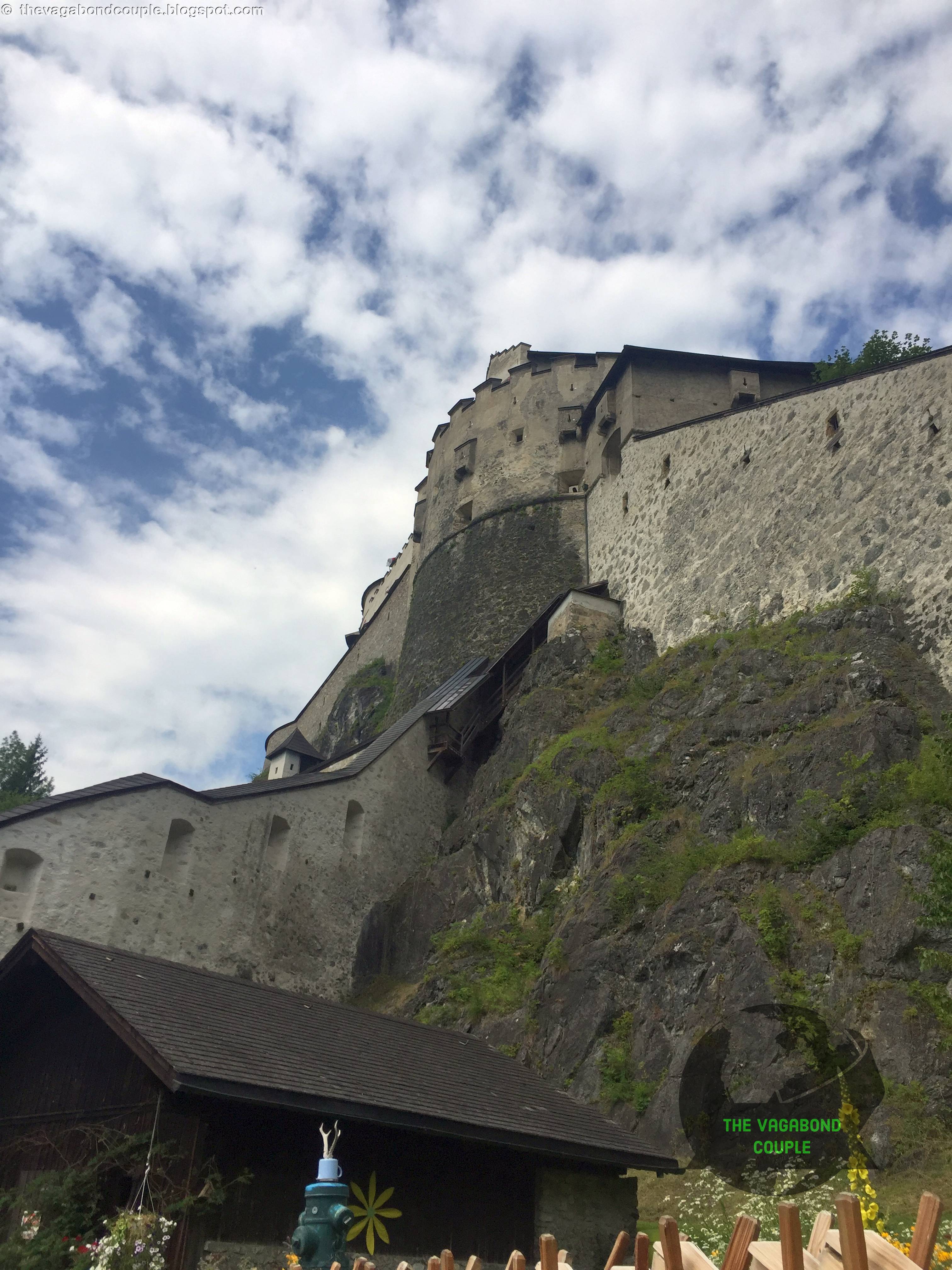
Hohenwerfen is what architects call a "spornburg" - a defensive fortress built on a rock spur. This positioning in the Salzburg Alps isn't just aesthetic; it's tactical genius. Attackers could only approach from one exposed side, which was heavily guarded by multiple walls, towers and archers who really didn't want visitors.

|
|
Burg Hohenwerfen: When your defensive walls need to also look Instagram-ready Romanesque foundations meet Gothic upgrades and Renaissance renovations |
The castle displays three main architectural styles because medieval builders were the original home renovation show hosts. The original 11th-century construction was Romanesque. That meant thick walls, rounded arches and small windows. Glass was expensive and arrows were incoming.
In the 16th century, they added Gothic elements because pointed arches were trending. The Renaissance brought decorative elements. By then, cannons made castles obsolete as military installations. So they became fancy symbols of power instead.
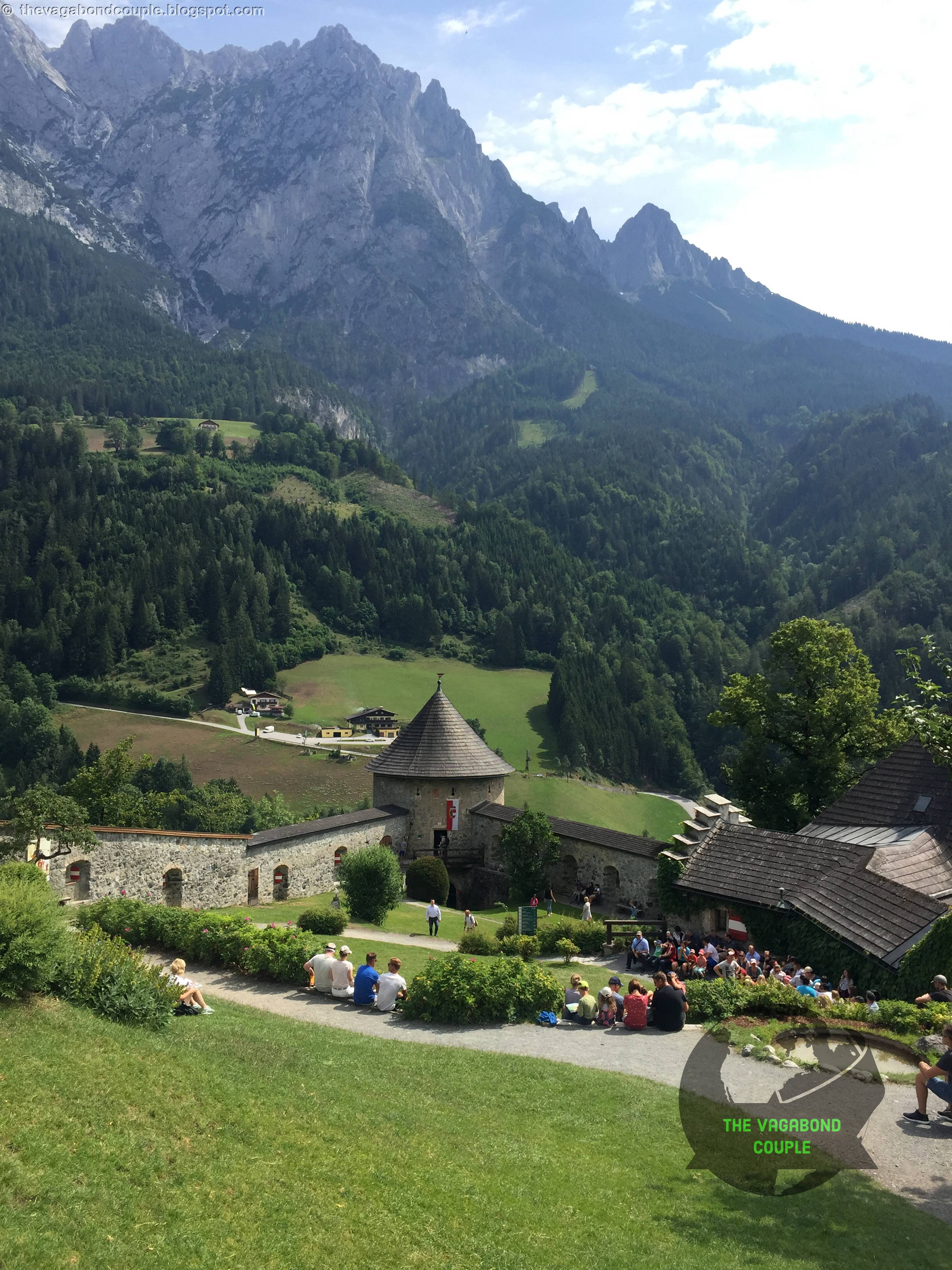
The keep (bergfried) stands 40 meters tall and offers views that make you understand why archbishops felt like gods. On clear days, you can see approximately 30 kilometers in every direction. Early warning system included.
| Style | Period | Key Features | Example in Castle |
|---|---|---|---|
| Romanesque | 11th–12th century | Thick walls, rounded arches, small windows | Lower levels of the keep and foundation walls |
| Gothic | 13th–16th century (additions) | Pointed arches, ribbed vaults, larger windows | Chapel of St. Leonard and upper halls |
| Renaissance | 16th–17th century | Decorative elements, symmetrical layouts, larger residential windows | Courtyard arcades and the Knights' Hall |
Table data verified by the Salzburg State Museums' publication on castle architecture.
Historical Soundscape: High in the Clock Tower hangs the "Burgahnl" (Castle Grandfather). Cast in 1568 by Hans Christoph Löffler, it weighs 4,412 kilograms (9,700 lbs). In earlier centuries, it wasn't used for timekeeping, but as a "Storm Bell," rung only to warn the valley of fire or approaching enemy armies.
The Chapel of St. Leonard: Where Prisoners Prayed for Mercy
The castle chapel is dedicated to St. Leonard of Noblac. He's the patron saint of prisoners, appropriately enough. It contains a rare 15th-century wooden statue of the Madonna that survived the 1931 fire. Prisoners would pray here before being taken to their cells. They hoped for divine intervention against the coming damp and darkness.
The chapel's acoustics are deliberately designed to make chanting sound more impressive. Test it yourself. Hum a note and feel the stone vibrate with nine centuries of whispered prayers and desperate bargains with heaven.
Exploring the Fortress
Visiting Hohenwerfen is like stepping into a time machine with uneven stone floors and excellent views. The self-guided tour takes you through rooms that haven't changed much since the 16th century. Except now they have explanatory plaques instead of armed guards.

|
|
Burg Hohenwerfen: The castle's internal courtyard – where medieval life happened Wells, staircases and stone walls that have seen centuries of drama |
The armory contains weapons that would make a medieval arms dealer proud. Crossbows with enough draw weight to punch through plate armor. Halberds that combined axe, hook and spear in one murderous package. Early handguns that were more likely to explode than hit anything.
Don't miss the "Knight's Hall" with its massive fireplace large enough to roast an entire boar. The archbishops would feast here while prisoners shivered in dungeons below. That's medieval income inequality in architectural form.
The Funicular at Burg Hohenwerfen: Medieval Castle, Modern Elevator
The funicular installed in 2005 is the castle's cheat code for lazy tourists (or smart ones, depending on your perspective). It climbs 73 vertical meters over a 210-meter track. The gradient goes up to 52%. That's steeper than most black diamond ski runs.
Watch: The formidable Burg Hohenwerfen
50th anniversary of "Where Eagles Dare" (English, 1968)
Vagabond Tip: The funicular runs continuously from 9:00 AM to 5:00 PM (last ride up at 4:30 PM) according to the official Salzburg state castle website (salzburg-burgen.at, accessed 2025). For a bit of exercise and unbeatable close‑up views of the walls, take the hiking trail down – it follows the historic servant’s path and takes about 20 minutes of easy descent.
The original ascent was via a steep path that took 20 minutes of heavy breathing. The funicular does it in 90 seconds while you enjoy views that medieval pilgrims earned with sweat and sore calves. Each car holds 35 people or approximately one busload of enthusiastic castle enthusiasts.
During construction, workers discovered medieval foundations they didn't know existed. The funicular supports had to be specially engineered to avoid damaging 11th-century masonry. That masonry had survived everything except modern tourism infrastructure.
A Hub of Culture and Entertainment
Today, Hohenwerfen isn't just a museum. It's a cultural center that hosts events ranging from medieval markets to classical concerts. The acoustics in the courtyard are surprisingly good for a space designed for military commands rather than Mozart.

|
|
Burg Hohenwerfen: This angle makes you understand why movie directors fell in love with it Every stone says "I was here before your country existed" |
The annual "Knights' Tournament" features jousting, sword fighting and archery demonstrations. They're historically accurate except for the safety equipment and liability waivers. Visitors can try on chainmail that weighs more than a small child. You'll quickly discover why medieval knights had back problems.
Christmas markets transform the castle into a fairy-tale setting. There's mulled wine, handmade crafts and carolers whose voices echo off 900-year-old walls. It's like Hallmark movie magic, but with actual history instead of predictable plotlines.
Pop Culture Fact: Gamers recognize the fortress as the inspiration for the "Der Eisendrache" (The Iron Dragon) zombies map in Call of Duty: Black Ops III. More recently, in Amazon’s The Man in the High Castle, the castle was digitally altered to serve as the Führerhauptquartier (Führer's Headquarters), a mountain fortress where the alternate-history Hitler resided.
The Falconry Center: Where Birds Rule the Skies
The falconry center at Hohenwerfen isn't just a tourist show. It's one of Europe's most respected centers for the ancient art of falconry. They house over 50 birds of 20 different species. That includes golden eagles with wing spans reaching 2.3 meters (7.5 feet).
These birds aren't trained pets; they are working partners in a UNESCO-recognized tradition. The practice follows the "De Arte Venandi cum Avibus" (The Art of Hunting with Birds), written by Holy Roman Emperor Frederick II in the 1240s. Beyond the show, the castle is part of a critical conservation effort for the Bearded Vulture (Bartgeier). Once extinct in the Alps, these massive scavengers - known for their bright orange chest feathers stained by iron-rich mud - are being reintroduced to the Hohe Tauern National Park nearby.
Vagabond Tip: The falconry demonstrations run daily at 11:15 AM, 2:15 PM and 4:30 PM (weather permitting), as published on the castle’s official schedule (salzburg-burgen.at, 2025). For the best view of the eagles’ landing, stand near the wooden railing on the left side of the amphitheater – a tip we got straight from the head falconer after the show.
Where Eagles Dare: Filming at Hohenwerfen
In 1968, Hollywood discovered what Austrian archbishops had known for centuries. Hohenwerfen is the most photogenic fortress in the Alps. When MGM needed a location for the classic Clint Eastwood movie "Where Eagles Dare," they needed a Nazi stronghold impregnable enough to justify the mission. They found it here at Schloss Adler (the movie name for Hohenwerfen).

|
|
Burg Hohenwerfen: The spot where Clint Eastwood's squint met medieval masonry Where Eagles Dare turned this Austrian fortress into Hollywood history |
The film is based on Alistair MacLean's novel. It follows Allied commandos infiltrating "Schloss Adler" (Castle Eagle) to rescue an American general. The production team considered building a studio set. Then someone saw Hohenwerfen and said, "Why fake what already looks impossibly perfect?"
Watch: Where Eagles Dare (1968) movie opening credits and theme
Filming occurred in January and February 1968. That meant the cast and crew endured Austrian winter conditions. Temperatures dropped to -15°C (5°F). Equipment froze and everyone learned why medieval castles had massive fireplaces.

|
|
Burg Hohenwerfen: The movie poster that made this castle famous worldwide Clint Eastwood and Richard Burton starring with a medieval co-star |
Richard Burton reportedly hated the cold. He would retreat to his heated trailer between takes. Clint Eastwood, being Clint Eastwood, apparently just squinted harder at the weather. The stunt doubles earned their paychecks on ice-covered battlements. One slip meant a very long drop.
Hohenwerfen's Cinematic Role: More Than Just Pretty Stones
Production designer Peter Murton faced a unique challenge. He had to make an 11th-century Austrian castle look like a WWII German stronghold. His solution was minimal. He added Nazi flags, some period vehicles and let the castle's inherent menacing beauty do the rest.

|
|
Burg Hohenwerfen: Movie history etched beside medieval history Where Eagles Dare left its mark on these ancient walls |
The cable car scenes weren't filmed at Hohenwerfen. They were shot at the Feuerkogel cable car near Ebensee, about 60 kilometers away. Special effects wizardry combined the locations seamlessly. Audiences believed the castle had its own aerial tramway. The film's budget was $7.7 million (about $60 million today). A significant portion was spent on creating those composite shots.
Iconic Scenes: When Hollywood Met the Holy Roman Empire
The most memorable sequence shows Eastwood's character dangling beneath the cable car. It was achieved using a combination of stunt work, miniatures and clever editing. The stunt double hung from a replica cable car 30 meters above a studio floor. The castle footage was added later.

|
|
Burg Hohenwerfen: The view that made movie audiences hold their breath Cable car suspense against a backdrop of Alpine grandeur |
The film's script underwent significant changes during production. Alistair MacLean originally wrote it as a novel, then adapted it for the screen. Reportedly, he completed the entire 185-page screenplay in just 35 days. He was holed up in a London hotel room, fueled by coffee and cigarettes.
Where Eagles Dare Takes Flight: The Production Challenges
The Austrian winter presented obstacles beyond just cold. Snow continuity became a nightmare. One day would bring fresh powder, the next would melt it. They needed artificial snow (a novelty in 1968) to maintain consistent visuals.

|
|
Burg Hohenwerfen: Imagine winter at Hohenwerfen – beautiful but brutal for film crews Then imagine setting up cameras in this while wearing 1960s equipment |
The production was so hazardous that Eastwood and Burton nicknamed it "Where Doubles Dare." The studio, fearing for their expensive stars, refused to let them perform the cable car jumps. Those death-defying leaps were performed by Alf Joint, a legendary stuntman who also doubled for Sean Connery in Goldfinger.

|
|
Burg Hohenwerfen: Stonework that survived centuries before meeting Hollywood Each groove and mark tells a story older than cinema itself |
By the late 19th century, the castle was a crumbling ruin. It was saved in 1898 by Archduke Eugen of Austria, the last secular Grand Master of the Teutonic Order. He bought the fortress and filled it with his personal art and weapon collection, effectively turning it into a princely residence again before a fire gutted it in 1931.

|
|
Burg Hohenwerfen in all its composite glory Multiple angles stitched together to show the castle's full majesty |
While the men were freezing on the battlements, Hollywood royalty was watching. Elizabeth Taylor, then married to Richard Burton, stayed in nearby Salzburg and often visited the set. The cast and crew - including the 'Schloss Adler' Nazis - would pause their war games to have tea with the most famous woman in the world.
Director Brian G. Hutton had previously worked with Eastwood on "Kelly's Heroes". He knew how to maximize the actor's minimalist style against the castle's maximalist architecture. The contrast created cinematic magic. Eastwood's tight-lipped American pragmatism met Burton's Shakespearean delivery against 11th-century stones.
The Miniature Magic: How They Faked the Impossible Shots
For scenes showing the castle and cable car together, special effects supervisor John Richardson built a 1:24 scale model of Hohenwerfen. This miniature measured 4 meters across. It was photographed with forced perspective to match the live-action footage.

|
|
Burg Hohenwerfen: The approach that tests visitors' dedication This path has been climbed by pilgrims, prisoners and movie stars |
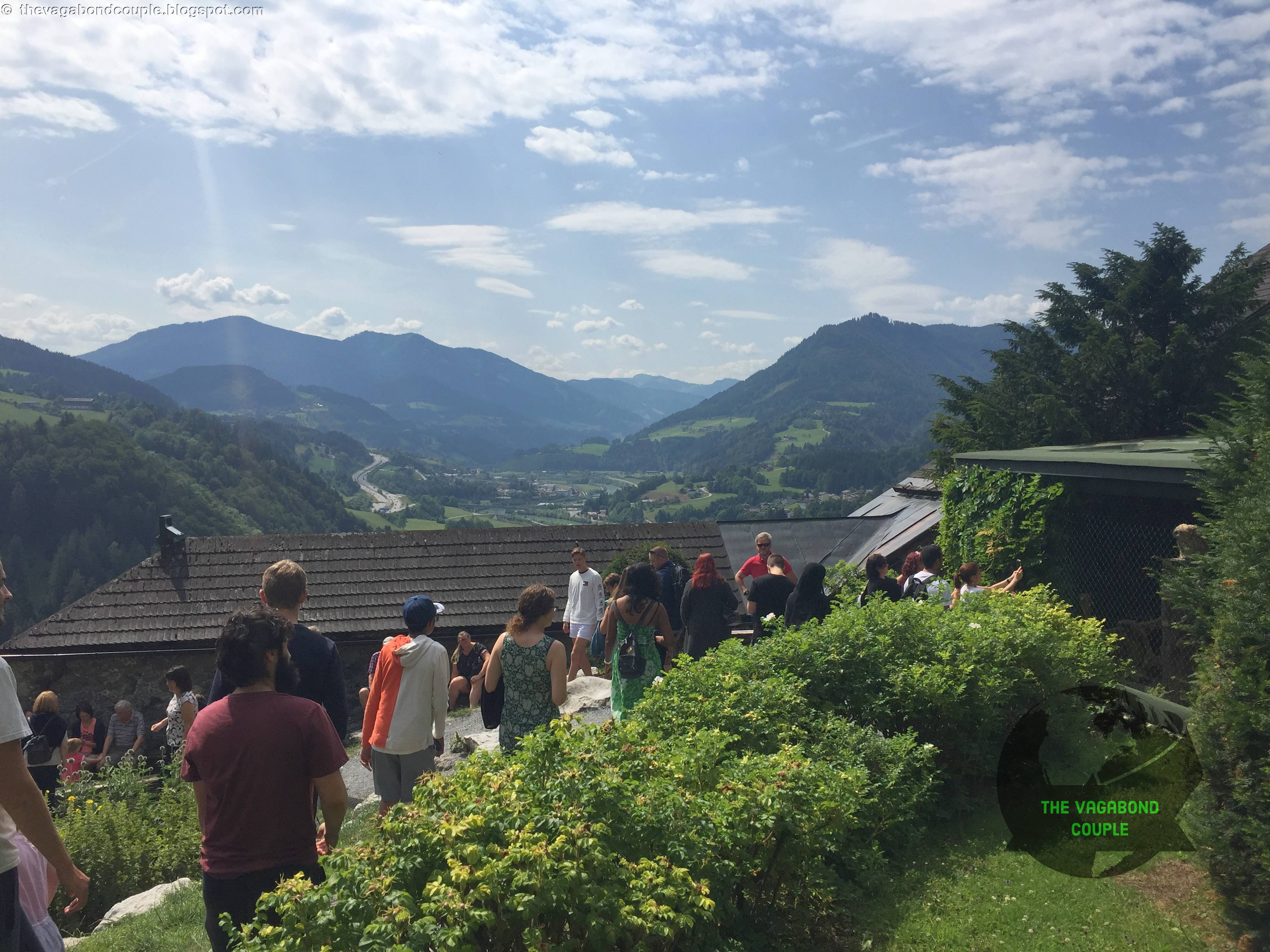
While looking up at the castle is intimidating, looking out from it reveals a softer side of cinema history. The meadow directly opposite the castle is the Gschwandtanger.
.jpg "Hohenwerfen Castle behind \"Do-Re-Mi\" Picnic Song Scene from \"The Sound of Music\"") |
| Hohenwerfen Castle behind "Do-Re-Mi" Picnic Song Scene from "The Sound of Music" |
This is the specific hillside where Julie Andrews taught the children "Do-Re-Mi" in The Sound of Music, with Hohenwerfen clearly visible in the background.

|
|
Burg Hohenwerfen: Defensive architecture that made attackers think twice These walls have weathered sieges, fires and Hollywood cameras |
Despite its "impregnable" look, the castle has a checkered military record. In 1800, during the Napoleonic Wars, the Austrian garrison surrendered the fortress to French General Jean Victor Moreau without firing a single shot. The French troops subsequently looted the armory and dismantled many of the fortifications.

|
|
Burg Hohenwerfen: The devil's in the details – and so is medieval craftsmanship Every groove, joint and carving served a purpose |
The film's famous cable car model was built at MGM's British studios in Borehamwood. It measured 6 meters long and was suspended from a gantry 12 meters high. Stuntman Alf Joint (doubling for Eastwood) hung beneath it for the iconic shot. Hidden wires supported him. They were painted out frame by frame – a painstaking process before digital effects.

|
|
Burg Hohenwerfen: The Alps doing what they do best – being dramatically beautiful This landscape hasn't changed much since the castle was built |
"Where Eagles Dare" was released in December 1968. It became MGM's highest-grossing film of that year, earning $21 million worldwide ($160 million adjusted). It cemented the "men on a mission" war film genre and inspired countless imitators. Though none had a castle quite this photogenic.

|
|
Burg Hohenwerfen: Tower power – medieval style These battlements have watched history unfold for generations |
Today, film buffs can still spot exact locations used in the movie. The courtyard where the major shootout occurs. The battlements where Eastwood eliminates Nazis with ruthless efficiency. The gatehouse that features in the final escape. All unchanged since 1968 and largely unchanged since 1077.
The Cast's Austrian Adventure: Burton, Eastwood and Freezing Temperatures
Richard Burton was at the height of his fame. He was fresh from "Who's Afraid of Virginia Woolf?" and in the midst of his tumultuous relationship with Elizabeth Taylor. He reportedly found the Austrian winter miserable but professional. He delivered his lines with Shakespearean gravitas even when his breath froze in the air.
Clint Eastwood was transitioning from Spaghetti Westerns to mainstream stardom. While he plays the strong, silent type, the "silence" is relative. In reality, Eastwood's Lieutenant Schaffer racks up the highest on-screen body count of his entire career in this film. He kills more enemies here than in any of his westerns or Dirty Harry movies.

|
|
Burg Hohenwerfen showing off its full composite glory The fortress in conversation with the valley it has watched for 900 years |
Mary Ure, playing the female lead, reportedly suffered most from the cold. Her character wears relatively light clothing in several outdoor scenes. That required her to rush to heaters between takes. The crew took to calling the production "Where Hypothermia Dare" behind the directors' backs.

|
|
Burg Hohenwerfen: The castle in its full environmental context Mountains, valley and medieval architecture in perfect harmony |
The film's success created a tourism boom for Hohenwerfen that continues today. Visitors often ask to see "the Eastwood tower" or "where Burton stood." The castle management embraces this. Guided tours specifically highlight filming locations alongside historical ones.
Legacy and Impact: When Hollywood Met History
"Where Eagles Dare" wasn't just a hit. It became a template for action movies that followed. Its blend of twisty plot, ensemble cast and spectacular location set a standard. The film's famous line "Broadsword calling Danny Boy" entered pop culture. It's referenced in everything from other films to video games.

|
|
Burg Hohenwerfen: The long walk to history – every stone tells a story This pathway has felt the footsteps of archbishops, prisoners and movie stars |
The film's composer, Ron Goodwin, created a score that perfectly matched the Alpine setting. The main theme has a martial rhythm and soaring brass. It evokes both the grandeur of the location and the tension of the plot. It remains one of the most recognizable film scores of the 1960s.

|
|
Burg Hohenwerfen: Inside the stone beast – where medieval life unfolded These walls have witnessed prayers, plots and prisoner lamentations |
Armory Fact: The castle museum houses a rare "Organ Gun" (Orgelgeschütz). It’s a multi-barreled cannon from the 16th century that could fire a volley of shots simultaneously. It was essentially the medieval equivalent of a shotgun, designed not for accuracy, but to sweep the narrow bridge entrance clear of unwanted guests.

|
|
Burg Hohenwerfen: Defensive architecture that says "come at me, bro" in stone These walls were designed to intimidate as much as protect |
For film location hunters, Hohenwerfen offers that rare combination. It's a historically significant site that also happens to be cinematically iconic. You're not just visiting a castle. You're walking through a film set that just happens to be 900 years old.
Other Appearances: The Castle's Supporting Roles
While "Where Eagles Dare" is Hohenwerfen's star turn, the castle has made other cinematic appearances. It appeared in the 2015 German-Austrian crime series "Die Toten vom Salzburg" (The Dead of Salzburg). That proves its dramatic potential remains undimmed nearly a millennium after construction.

|
|
Burg Hohenwerfen: Battlements that have seen real and cinematic conflict Where medieval defenders and Hollywood Nazis met their match |
Film Location Trivia: The castle has range. In the 2003 rom-com Just Married, it stood in for a French chateau where Ashton Kutcher and Brittany Murphy stayed. In the cult fantasy miniseries The 10th Kingdom (2000), it served as the "Snow White Memorial Prison." It seems to specialize in "beautiful but slightly foreboding" roles.

|
|
Burg Hohenwerfen: Where movie history meets medieval history These markers tell two stories at once – cinematic and architectural |
The castle's cinematic appeal lies in its authenticity. Unlike studio sets or CGI creations, Hohenwerfen offers texture you can feel. Weathered stone, uneven floors and the weight of actual history. Film crews don't need to create atmosphere. They just need to capture what's already there.
Filming Hazard: In the climactic scene where Major von Hapen (Derren Nesbitt) is shot, the special effects team rigged the "squibs" (blood packs) with too much explosive charge. When they detonated, Nesbitt was temporarily blinded. He had to be guided off the set and spent weeks recovering before his sight fully returned.
Salzach Valley
The Salzach Valley, or Salzachtal in German, is the Alpine stage upon which Hohenwerfen performs its stone drama. This isn't just pretty scenery. It's a geological and historical corridor that has shaped Central Europe for millennia.

|
|
Burg Hohenwerfen: The view that made archbishops feel like kings Salzach Valley stretching toward the horizon from Hohenwerfen's heights |
The valley was carved by the Salzach River. It begins in the Kitzbühel Alps at an elevation of 2,300 meters. It flows 225 kilometers north to join the Inn River. The name "Salzach" comes from the German word "Salz" (salt). That reflects the region's history as a major salt trading route since Celtic times around 400 BC.
Salt was medieval gold. Controlling its trade made the Salzburg archbishops wealthy enough to build castles like Hohenwerfen. The "White Gold" route saw salt transported from Hallein and Hallstatt mines north to Bavaria. Toll stations extracted taxes at strategic points like – you guessed it – Werfen.
The name "Salzach" literally translates to "Salt River." For centuries, this was the superhighway for "White Gold" mined in nearby Hallein. The Archbishops didn't build Hohenwerfen just for the view; they built it to ensure that not a single barge of salt floated past without paying a toll.
The valley's geography created a natural transportation corridor. It became increasingly important through history. Roman roads followed the river. Medieval trade routes expanded them. Today's Tauern Autobahn (A10) motorway carries modern traffic along essentially the same path.

|
|
Burg Hohenwerfen: The Salzach River valley floor perspective – looking down at history From down there, you will understand why the castle was built up here |
The Geology That Made History Possible
The Salzach Valley sits within the Northern Limestone Alps, part of the larger Eastern Alps. The mountains are primarily composed of Dachstein limestone. It formed during the Triassic period about 230 million years ago. This area was a warm, shallow sea back then.
Glacial erosion during the Ice Ages (2.6 million to 11,700 years ago) carved the U-shaped valley we see today. The glacier that occupied this valley was up to 1,000 meters thick. Imagine ice completely covering Hohenwerfen with room to spare.
The castle's rock spur is made of Hauptdolomit (main dolomite). It's a particularly hard limestone that resisted glacial scraping better than surrounding rock. Essentially, the glacier cleaned off the top of this natural fortress. That made it even more defensible.
Falconry at Burg Hohenwerfen (Flugvorführungen)
The falconry demonstrations at Hohenwerfen aren't just bird shows. They're living history lessons connecting modern visitors to a tradition that predates the castle itself. Falconry arrived in Central Europe around the 6th century AD. It was brought by Germanic tribes who learned it from the Romans, who learned it from the Persians.

|
|
Burg Hohenwerfen: Ancient art meets Alpine backdrop Falconry demonstrations that connect modern visitors to medieval traditions |
Demonstrations occur daily at 11:15 AM, 2:15 PM and 4:30 PM, weather permitting. The 4:30 show is particularly dramatic. The setting sun illuminates the castle walls while birds soar against the darkening sky.
|
|
Burg Hohenwerfen: Golden eagle in flight – nature's perfect hunting machine Wingspan up to 2.3 meters of pure avian power |
The center houses approximately 50 birds of prey representing 20 species. The stars are the golden eagles (Aquila chrysaetos). They can reach speeds of 320 km/h (200 mph) during hunting dives. Their talons exert pressure of 750 psi – enough to crush a deer's skull.
"Falconry is not a hobby here; it's a UNESCO Intangible Cultural Heritage. The practice at Hohenwerfen follows the traditions laid down by Holy Roman Emperor Frederick II in the 1240s. His treatise De Arte Venandi cum Avibus (The Art of Hunting with Birds) remains the bible of the sport to this day."
Medieval falconry was strictly regulated by social hierarchy. The "Boke of St. Albans" (1486) famously outlined which birds were appropriate for which social classes. Eagles for emperors, gyrfalcons for kings, peregrine falcons for earls and so on down to kestrels for servants. The Salzburg archbishops, as prince-archbishops, would have flown eagles or gyrfalcons.
|
|
Burg Hohenwerfen: Human and bird – a partnership older than this castle Falconry techniques unchanged for centuries |
The Birds Themselves: Feathered Aristocrats
The center's collection includes species that would have flown in medieval times. Saker falcons (Falco cherrug) from the Eurasian steppes. Gyrfalcons (Falco rusticolus) from the Arctic (the largest falcon species). Peregrine falcons (Falco peregrinus), the world's fastest animal.
Also present are owls – not traditionally used in falconry but kept for educational purposes. The Eurasian eagle-owl (Bubo bubo) is Europe's largest owl with a wingspan up to 1.8 meters. Unlike falcons, owls hunt primarily by sound. Their facial discs funnel even the slightest rustle to their ears.

|
|
Burg Hohenwerfen: Aerial mastery that humans can only dream of Evolution's perfect flying machine in action |
Falconry equipment has changed little since medieval times. The hood (used to calm birds), jesses (leg straps) and bells (to locate birds in vegetation) are virtually identical to those depicted in 14th-century manuscripts. The center demonstrates how each piece functions and why it's essential to the partnership.

|
|
Burg Hohenwerfen: A gathering of avian nobility Different species demonstrating their unique hunting adaptations |
UNESCO recognized falconry as Intangible Cultural Heritage of Humanity in 2010. It noted its role in connecting people to nature and preserving traditional knowledge. The Hohenwerfen center contributes to this preservation while making it accessible to modern audiences.
The Falconry Center's Conservation Work
Beyond demonstrations, the center participates in breeding programs for endangered raptors. They've successfully bred peregrine falcons. Their populations crashed in the mid-20th century due to DDT pesticide use (which thinned eggshells).
Educational programs teach visitors about raptor conservation challenges. Habitat loss, poisoning (both accidental and intentional) and collisions with power lines or wind turbines. The center advocates for "raptor-friendly" energy infrastructure and responsible rodent control methods.
|
|
Burg Hohenwerfen: Traditional skills passed through generations Falconry knowledge surviving from medieval times to today |
Visitors can sometimes participate in feeding sessions (under supervision) or watch training exercises. The center emphasizes that these are wild animals at heart, not pets. The relationship is based on mutual benefit rather than domestication.

|
|
Burg Hohenwerfen: The moment of return – partnership in action Centuries of falconry tradition captured in one image |
In 2000, the castle opened the Austrian Falconry Museum (Deutsches Falkenereimuseum) in the Wallerturm tower. It is the first museum of its kind in Austria, documenting the hunting tradition that was once the exclusive privilege of the aristocracy. The exhibit includes historic hoods, jesses and art spanning 1,000 years.
Eisriesenwelt: Where Winter Never Ends (and Your Knees Never Forget)
If you’ve ever wondered what it’s like to step inside a subterranean freezer that hasn’t been defrosted since the Ice Age, the Eisriesenwelt in Werfen is your answer. Walking into the "World of the Ice Giants" means trading the warm Austrian sun for a crisp zero degrees - presumably to keep the local mountain trolls from spoiling.
And no, the world's largest ice cave system is not in Iceland; its here.

|
|
Located in Werfen, Austria, inside the Hochkogel mountain, Eisriesenwelt is the world’s largest ice cave and sits approximately 40 km south of Salzburg in the Tennengebirge Alps. This is the "elephant" formation. By Arie M. den toom - Own work, CC BY-SA 4.0, Link |
Vagabond Tip: Eisriesenwelt, the world’s largest ice cave, is just 6 km up the mountain from the castle but requires a separate 3‑ to 4‑hour visit. According to the official Eisriesenwelt website (eisriesenwelt.at, 2025), the cave is open from May to October, with guided tours every 30 minutes from 9:30 AM to 3:30 PM. Plan to visit the ice cave in the morning and the castle in the afternoon – or do it the other way around if you want to test your time‑management skills.
Be warned, the system is vast. You’ll find yourself climbing 1,400 steps, which is roughly the same number of rooms the Habsburgs had in their summer palace - except here you get significantly more frostbite and fewer gold-plated toilets. Just remember that the "giant" part of the name isn't merely marketing; the formations look like a nature documentary where the set designer went a bit rogue with a high-powered ice machine.
The distance from the Eisriesenwelt visitor center (and its parking lot) to the Burg Hohenwerfen parking lot in the valley is approximately 6 to 7 kilometers (about 4 miles).
- By Car: It takes about 15–20 minutes to drive. You will drive down the mountain access road (Eishöhlenstraße) from the caves and back into the valley to reach the castle's parking area.
- By Foot: It is a strenuous hike of approximately 1 hour and 15 minutes to 1.5 hours. The route involves significant elevation change since the ice caves are high on the mountain and the castle is on a smaller rock outcrop in the valley.
Plan Your Visit
Burg Hohenwerfen requires more planning than your average castle visit. This isn't a "pop in for 30 minutes" kind of place. It's a full-day experience that demands comfortable shoes, weather-appropriate clothing and a sense of adventure.

|
|
Burg Hohenwerfen: The practical details of visiting 900 years of history Opening hours, tour times and essential information |
The castle is open from April to October, with limited winter openings for special events. Summer months (July-August) see the most visitors, but also offer the most activities. Shoulder seasons (May-June, September) provide smaller crowds and pleasant weather.
Admission includes the funicular ride, castle entry and falconry demonstrations. Guided tours in German run regularly. English tours are available at scheduled times or by advance booking. Audio guides are available in multiple languages for self-guided exploration.
The castle's transition from private residence to public treasure wasn't simple. In 1931, a fire gutted the main building while it was owned by Archduke Eugen. He sold the charred remains to the Salzburg regional administration in 1938. It wasn't until 1987 that the State of Salzburg finally opened it to the general public, transforming it from a police training center into the "Erlebnisburg" (Adventure Castle) you see today.
Getting There: Medieval Fortress, Modern Access
By car: Take the A10 Tauern Autobahn, exit at Werfen. Follow signs to the castle – you can't miss it looming above the town. Parking is available at the base station (paid). The drive from Salzburg takes about 40 minutes, from Munich about 2 hours.
By train: Werfen station is on the Salzburg-Tyrol railway line. From the station, it's a 30-minute walk to the base station or a short taxi ride. Trains from Salzburg run hourly and take about 45 minutes.
By bus: Regional buses connect Werfen with surrounding towns. Check schedules carefully as service can be limited, especially outside peak season.

|
|
Burg Hohenwerfen: A masterpiece of medieval military architecture Every tower, wall and defensive feature visible |
Practical Tips from Veterans of the Stone Ascent
Wear sturdy, comfortable shoes with good grip. The castle paths are uneven, stairs are steep and surfaces can be slippery when wet. This is not a high heels or flip-flops kind of place.
Dress in layers. The castle is cooler than the valley and weather can change rapidly in the Alps. Even summer visits might require a jacket, especially if clouds roll in.
Allow at least 3-4 hours for a proper visit. This gives time for the funicular ride, castle exploration, falconry demonstration and enjoying the views without rushing. Serious photographers or history buffs might want 5-6 hours.
Bring water and snacks, though there is a café at the castle serving traditional Austrian food and drinks. The "Burgschänke" offers solid Alpine fare with views that would make any meal memorable.
Check the falconry demonstration schedule and plan your visit around it. The shows are a highlight and worth structuring your day around. Arrive at the demonstration area 15 minutes early for good viewing positions.

|
|
Burg Hohenwerfen: The final view that stays with you long after you've descended Nature and human achievement in perfect dramatic balance |
Accessibility Considerations
The funicular is wheelchair accessible, but the castle itself presents challenges. Many areas have steps, uneven surfaces and narrow passages. The main courtyard and some ground-floor rooms are accessible, but upper levels and towers are not.
Contact the castle in advance if you have specific accessibility needs. They can provide detailed information about which areas are accessible and may be able to arrange special assistance.
For visitors with mobility issues but not wheelchair users, be prepared for considerable walking and climbing. There are benches throughout for resting, but the site demands a reasonable level of fitness.
Combination Tickets and Nearby Attractions
The "Salzburg Card" includes admission to Hohenwerfen plus many other Salzburg attractions. If you're spending several days in the region, this can offer significant savings.
Nearby attractions include the Eisriesenwelt (World of the Ice Giants). It's the largest ice cave in the world located just 5 kilometers from Werfen. The Sound of Music filming locations in Salzburg are about 40 minutes away by car or train.
Consider combining Hohenwerfen with a visit to Hallein Salt Mine (about 30 minutes away). That completes the "salt and castle" historical experience that defined this region's wealth and power.
Burg Hohenwerfen isn't just another castle on the tourist trail. It's a multi-layered experience where medieval history, cinematic legacy, Alpine beauty and living traditions converge. You come for the postcard views but leave with something deeper. A tangible connection to centuries of human drama played out against an unforgettably dramatic backdrop.
As we descended back to the 21st century, our thoughts were already turning to other cinematic landmarks. Next we'll retrace the filming locations of The Sound of Music (1965) around Salzburg, Austria and across the border at Julie's Meadow in Germany. When you start chasing movie history in Austria, one film inevitably leads to another.

0 comments