

|
|
The Old Vine (Žametovka) in Maribor, Slovenia: World's oldest plant bearing grapes for making wine This 400-year-old survivor has seen more history than most European museums |
So there we were after driving in across a country border from Split, Croatia, staring at a plant that's older than the United States. The Guinness Book of World Records documents this botanical senior citizen. Reading about it and standing before its gnarled, twisty reality are two completely different experiences.
The Old Vine of Maribor is not merely a botanical curiosity but a living archive of Central European viticulture. Its survival through centuries of political upheaval, climatic shifts and technological transformation speaks to both human stewardship and natural resilience.
The 1972 scientific measurement, performed by Professor Rihard Erker using a gentle increment borer and microscope analysis, established it was at least 350 years old back then. That means this vine was already well over 150 years old when the American Revolution kicked off. It was bearing fruit before the steam engine was patented and predates the rise and fall of Yugoslavia by several centuries. Talk about perspective.
What they don't tell you in the guidebooks is that this vine has survived more than just time. It endured the Ottoman incursions, Napoleon's march through Styria, two World Wars and Yugoslav communism. The central pith being too rotten for precise dating? That's not a flaw - it's character. This plant has earned its wrinkles.
Vagabond Tip: The Old Vine House museum opens at 9am. Be there at 8:55am. You'll get five minutes of silent, crowd-free communion with the ancient vine before the tour buses unload. It's the difference between seeing a monument and feeling its history.
The Road to Maribor: A Croatian-Slovenian Highway Symphony
Our road trip to Slovenia began in Split, Croatia. We decided that driving to Vienna via Maribor was the adult version of "I wonder what's down that road." The A1 motorway from Split to Zagreb is Croatia's spine - a beautiful, toll-infested spine.
We quickly learned that Croatian toll plazas have personalities. Some are "Cash Only" lanes that seem to move in geological time. Others are dedicated "ENC" (Electronic Toll Collection) lanes that you absolutely should not enter unless you have the transponder, lest you enjoy the symphony of angry horns from locals stuck behind you. Pro tip: The "Bank Card" lanes are usually the fastest way for tourists to escape the bottleneck.

|
|
Toll station Dugopolje on Croatia A1 Motorway near Split Where your vacation budget meets Croatian infrastructure funding |
The Vignette Shuffle: Slovenia's Highway Subscription Service
Slovenia operates on a "vignette" system for motorways. Think of it as a Netflix subscription for roads. You can't buy it at the border like a candy bar - it's electronic. We discovered this little gem of bureaucracy about 75 kilometers from the Slovenian border.
The official DARS website sells them online. Gas stations near the border in Croatia also sell them with varying degrees of enthusiasm. We found ours at the busy "Odmorište Plitvice sjever" (Plitvice North Rest Stop) on the Zagreb bypass, right next to the INA gas station.
This rest stop is a strategic checkpoint for travelers heading north. It is often the last reliable location to purchase a physical Slovenian vignette before you hit the inevitable queue at the Macelj border crossing. If you see a sign saying "Javna govornica" nearby, don't be confused—it's just the Croatian term for a public payphone, a relic still standing in the age of smartphones.
Vagabond Tip: Buy your Slovenian e-vignette online (dars.si) before you cross the border. Do it the night before over a glass of wine. The website is straightforward, the confirmation email is instant and you avoid the frantic 4G search in a Croatian gas station parking lot while trucks honk.

|
|
Czech Republic and Slovenia vignettes on our car windshield in Croatia The European road trip sticker collection begins |
Here's the pro tip everyone whispers but no official source will admit. Some gas stations just inside Slovenia sell vignettes. Yes, technically you're driving without one for a hot minute. No, we're not recommending it, especially since the fine for driving without a valid e-vignette ranges from 300 to 800 Euros. That is roughly the cost of 200 celebratory bureks. But if you honestly forget? pull over at the very first station across the line; there is usually a small grace window before the DARS cameras flag you.
Speaking of these border roads, the modern A1 motorway essentially follows the path of historic trade routes that have connected the Adriatic coast to the interior of Central Europe for centuries.

|
|
Toll station Zagreb-Demerje on Croatia A1 Motorway near Zagreb Cash is not welcome here - cards only, folks |
Border Ballet: Crossing from Croatia to Slovenia
The Macelj border crossing is where Croatia says "doviđenja" and Slovenia says "dobrodošli." It's the most common crossing for this route. The E59/A1 winds through landscapes that make you want to pull over every five minutes for photos.
The Macelj crossing represents more than a political boundary; it marks the transition from Mediterranean to Alpine influences, from Adriatic to Central European cultures.

|
|
Naplatna Postaja Trakošćan toll plaza, Gornji Macelj, Croatia Last Croatian toll before the Slovenian adventure begins |
The village of Gornji Macelj sits right on the border. For years, locals lived with the reality of a frontier running through their daily lives, a situation that became more formalized when Slovenia and Croatia became independent nations.

|
|
Goodbye sign at Croatia's border with Slovenia, Gornji Macelj Farewell, Mediterranean vibes; hello, Alpine elegance |
Greenery Alert: You are entering the "Green Heart of Europe." Factually speaking, Slovenia is the third most forested nation in the European Union, with trees covering nearly 60% of the land (trailing only Finland and Sweden). If you take a deep breath, you aren't just smelling air; you're inhaling the output of one of the continent's largest oxygen factories.

|
|
Macelj Land Border Crossing (Granični prijelaz Macelj), Croatia-Slovenia Where two EU nations still like to check each other's paperwork |
Crossing at Macelj is to traverse not just a national frontier, but a climatic and cultural watershed. You leave behind the sun-bleached karst of the Dinarides and enter the lush, rolling Haloze hills, a region famous for steep vineyards and dense beech forests. The air itself changes here, dropping a few degrees and carrying the scent of damp earth and pine instead of the Adriatic's maquis and salt.

|
|
Slovenia Welcome sign after crossing Macelj Land Border Crossing from Croatia The Alpine air suddenly smells different - cleaner, with hints of pine and possibility |
The distance from Split to Maribor is about 426 kilometers. Google Maps says 5 hours 15 minutes. Reality says "add an hour for tolls, border formalities and that coffee you desperately need." In peak season? Double that. We learned Slovenian highways have a calming, efficient vibe compared to Croatia's more... enthusiastic drivers.

|
|
A4 / E59 Motorway (Slivnica - Draženci), Slovenia Slovenian highways: Where efficiency meets Alpine scenery |
Maribor's Lent District: Where History Meets Lunch (A Walking Map Unfolds)
It was early afternoon when we rolled into Maribor. The plan was simple: park the car, find food, then hunt for an ancient vine. Maribor's Lent district is the kind of place that makes you want to quit your job and open a small bookstore by the river. The Drava River flows through with a gentle persistence that suggests it's seen everything and is mildly amused by tourists.
We arrived hungry. This is the travel truth nobody admits. Historical sites are better on a full stomach. We found Gril Ranca right next to the Old Vine House. The outdoor seating offered a view of the Drava that made our mediocre photography skills look professional.

|
|
Drava river at Lent in Old Town Maribor, Slovenia The river that powered medieval mills now powers Instagram feeds |
Speaking of the Drava, here's a bit of obscure river trivia. In the late 19th century, the Drava was home to a unique profession: the "splavar" or timber rafter. Men would construct massive rafts from logs floated down from the Austrian Alps. These rafts, sometimes over 100 meters long, would be piloted down the Drava and into the Danube all the way to Belgrade and beyond. The last commercial timber raft docked in Maribor in 1952, ending a tradition that dated back to Roman times, though the "Rafting of the Bell" event still commemorates this heritage. You can still see old mooring rings set into the stone embankments in Lent.

|
|
Drava river at Lent in Old Town Maribor, Slovenia Where the water flows slower than the afternoon wine consumption |
The Drava riverfront has seen centuries of history, from medieval trade to the turbulence of World War II, when the city's bridges were strategic targets. Today, it is a peaceful promenade.
Vagabond Tip: For the perfect post-lunch stroll, walk the Lent riverfront from the Old Vine House west towards the Maribor Castle. The afternoon sun lights up the pastel facades and the crowds thin out the further you get from the main square.

|
|
Drava river at Lent district in Maribor Old Town, Slovenia The liquid highway that made Maribor a medieval trading powerhouse |
Gril Ranca: Meat Paradise with a River View
Gril Ranca specializes in the holy trinity of Balkan grill. That's ćevapčići, pleskavica and lepinja. Their house specialty, Pleskavica Ranca, should probably have its own UNESCO designation.
The culinary traditions of Slovenian Styria (Štajerska) represent a unique confluence of Alpine, Pannonian and Balkan influences. It is a place where heavy Austrian-style strudels coexist peacefully with spicy Balkan grills.
| Aspect | Lent District (Riverside) | Main Square (Glavni trg) |
|---|---|---|
| Primary Vibe | Historic, relaxed, scenic. Lunch with a Drava River view. | Civic, bustling, central. Coffee & people-watching. |
| Food Speciality | Traditional grilled meats (Ćevapčići, Pleskavica). Hearty, rustic. | Pastries, cakes, lighter lunches. More cafe fare. |
| Best For | A long, leisurely lunch. Ideal after visiting the Old Vine. | A mid-morning coffee or afternoon drink. The city's living room. |
| Price Point | Moderate. You're paying slightly more for the iconic location. | Varied. From tourist-priced terraces to affordable local bakeries. |
| Vagabond Verdict | Come here to eat. The combination of food and setting is unbeatable. | Come here to be. Soak in the city's rhythm from a sidewalk table. |

|
|
Gril Ranca outdoor seating by the Drava River in Maribor Where meat meets water views in perfect Slovenian harmony |
The Old Vine House: Meeting a Botanical Celebrity
Belly full, it was time for the main event. If you are looking for the top things to do in Maribor, this is number one. The Old Vine House (Hiša Stare trte) is home to the confirmed world's oldest vine. The Žametovka vine variety grows on the facade like it's trying to escape. Its branches sprawl over 15 meters, which is impressive for something that's basically a plant pensioner.
What's fascinating is the wine production. The vine produces just enough grapes each year to make about 100 bottles of 2.5 deciliter wines. These aren't sold - they're gifted to dignitaries, celebrities and apparently, lucky travelers who visit during harvest years.

|
|
Gril Ranca interior grill station in Maribor, Slovenia Where meat gets its final transformation before meeting your plate |
The grill master's technique here yields excellent results, with a distinct smoky flavor that suggests traditional preparation methods.

|
|
Traditional Slovenian food at Grill Ranca in Maribor Ćevapčići, pleskavica and lepinja: The Balkan grill holy trinity |
The Museum: A Vine's Biography
The Old Vine House museum tells the vine's story from the late Middle Ages to today. It's a surprisingly engaging tale of survival. The vine survived the Ottoman sieges of the 16th century, the Thirty Years' War, Napoleon's occupation, both World Wars and even the Yugoslav period when private winemaking was... discouraged.
The vine has faced many threats over the centuries, including Allied bombing during World War II which destroyed part of the Old Vine House, yet the vine itself miraculously survived.
The Žametovka variety represents a genetic reservoir of immense value. Its resistance to phylloxera, which devastated European vineyards in the 19th century, suggests unique adaptations.

|
|
World's oldest vine growing on facade of Old Vine House (Stari trt), Maribor, Slovenia This vine was already old when Shakespeare was writing plays Click here for 360 panorama |
The house itself has undergone many changes over the centuries, evolving from part of the city wall to the museum it is today.

|
|
Old Vine House (Stari trt) entrance door in Maribor, Slovenia The doorway to four centuries of viticultural history |
The Wine Tasting: Sipping History
We visited during a harvest year, which is like winning the viticultural lottery. The wine from the Old Vine is strictly allocated into 2.5 deciliter (250ml) artist-designed bottles. These aren't something you grab off a shelf; they are official protocol gifts of the city. If you are lucky enough to be offered a tasting during a festival, you don't get a full glass, you get a precious sip. But when that sip represents grapes from a 400-year-old vine, you hold it on your palate as long as possible.
The taste? Complex. Earthy with a hint of "I survived the Thirty Years' War." There's a depth that commercial wines simply can't replicate. It's not the best wine you'll ever taste, but it's definitely the most historically significant.

|
|
Old Vine House (Stari trt) museum entrance in Maribor, Slovenia Where four centuries of wine history are bottled in exhibits |
The tradition of gifting the Old Vine's wine is reserved for VIPs. Recipients have included Pope John Paul II, Queen Elizabeth II and Bill Clinton.

|
|
Wine from grapes grown on the Old Vine in 250ml protocol bottles, Maribor, Slovenia A rare vintage strictly allocated for state protocol and dignitaries |
Practical tip: The Old Vine House is open daily (check for shorter winter hours). While there is a small fee for the museum, the site is the premier spot for Maribor wine tasting. The gift shop sells souvenirs, but the real prize - if you visit during a harvest year and they are pouring samples - is the experience itself.
Vagabond Tip: If you're visiting outside of a harvest year (wine is only made in good harvest years), don't despair. The museum sells small, tasteful bottles of local Žametovka wine from nearby vineyards. It's the same grape variety, just from younger vines. The perfect, legally-acquired consolation prize.
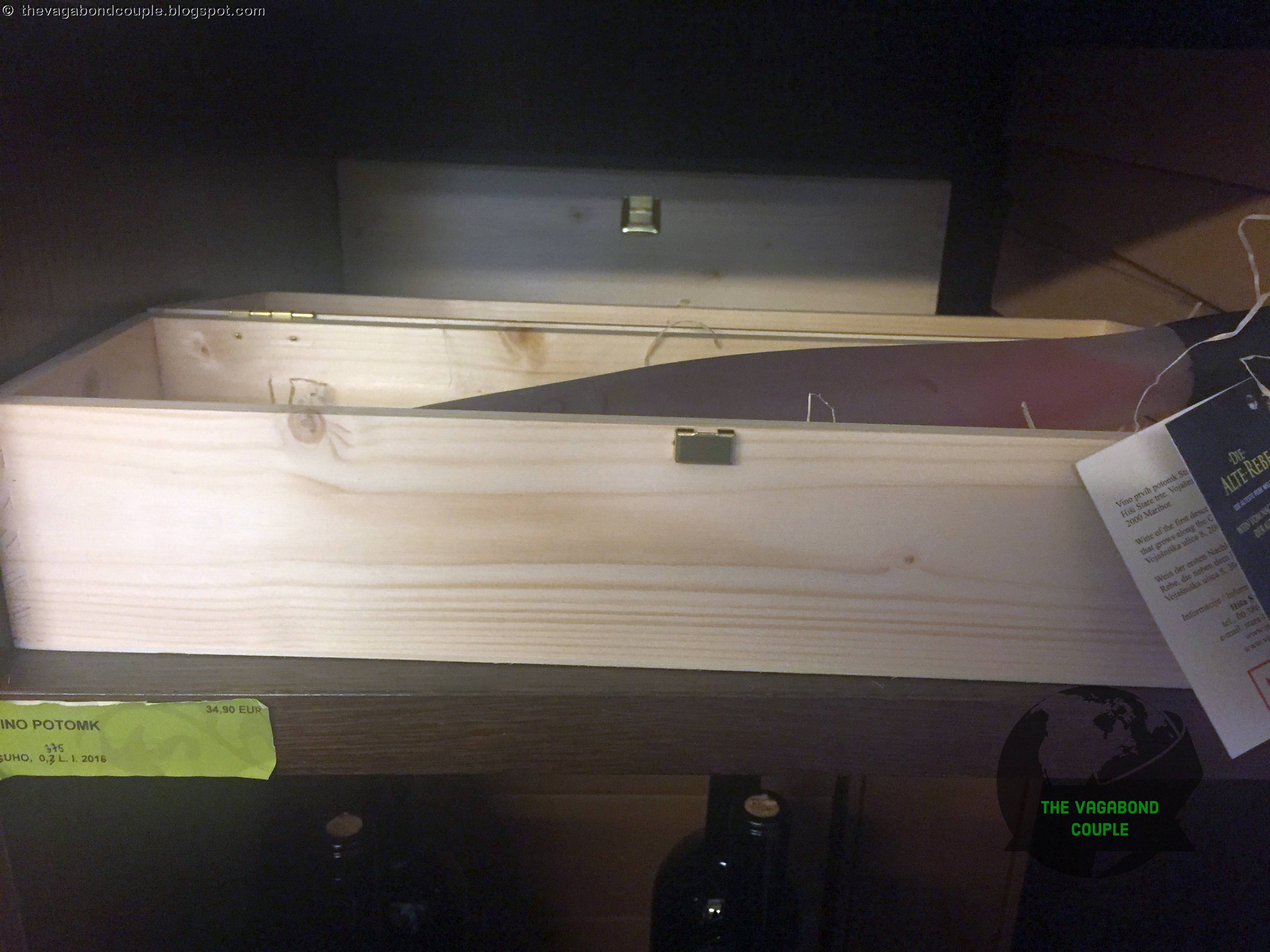
|
|
A bottle of wine from the Old Vine's descendant grafts being packed for us in Maribor, Slovenia Taking home a delicious souvenir from the museum shop |
Maribor's Main Square: The Heart of the City (Late Afternoon Pivot)
With a small bottle of history carefully packed away, we walked the few hundred meters from the riverside Lent district up to Glavni trg (Main Square), where Maribor comes to life. The Town Hall presides over a space that's seen markets, protests, celebrations and probably a few questionable fashion trends over the centuries.
What's fascinating about Maribor's architecture is its layered history. You can see Gothic foundations, Renaissance facades, Baroque additions and modernist interventions all within a few blocks.

|
|
Lent district - Maribor Old Town Main Square (Glavni trg) and Town Hall, Slovenia Where Renaissance architecture meets modern Slovenian civic life |
The Town Hall: Maribor's Architectural Chameleon
Maribor Town Hall's architectural journey reads like a historical soap opera. Built in 1515 during the town's expansion after Ottoman threats diminished. Remodeled in Renaissance style 1563-1565 when Renaissance was the new black. Then in the mid-19th century, someone decided Classical was cooler. Finally, 20th-century restoration said "let's go back to Renaissance."
The result is a building that's confidently confused about its identity, but somehow it works. Right in front of it stands the elaborate white Plague Column. While the original was erected in 1681 by grateful survivors, the monument you see today is actually a spectacular 1743 replica created by the sculptor Jožef Straub, commissioned because the original had weathered too severely. Between the Town Hall's balcony and this baroque masterpiece, you have the absolute epicenter of Maribor's civic history.

|
|
Maribor Town Hall facade on Main Square, Slovenia Renaissance style with an identity crisis spanning five centuries |
Departing Maribor: Carrying Centuries in a Wine Bottle
As the late afternoon light began to soften, we prepared to continue to Vienna, we realized Maribor had given us more than just a checkmark on a tourist list. The Old Vine isn't just a plant - it's a metaphor. It represents continuity in a region that's seen empires rise and fall, borders shift and ideologies come and go.
The 400-year-old vine has survived because people cared enough to protect it. In a world of constant change, that's a powerful lesson. The wine we took with us wasn't just fermented grapes; it was liquid resilience.

|
|
One of the numerous narrow alleys in Lent district of Old City, Maribor, Slovenia This one connects Glavni trg (main square) to Vojašniška ulica along the Drava river Medieval urban planning at its most atmospheric |
The drive from Split to Vienna via Maribor is more than a route - it's a journey through layers of European history. From Mediterranean Croatia through Alpine Slovenia to imperial Austria. Each border crossing isn't just a passport stamp; it's a cultural transition.
Maribor travel guide final thoughts? This city, with its ancient vine and youthful energy, serves as the perfect pivot point. It reminds us that some things - like good wine, flowing rivers and human curiosity - transcend centuries. As we drove back toward Vienna, we knew we'd return. Because any city that can keep a plant alive for 400 years clearly knows something about preservation, patience and the sweet taste of history.
Maribor was the last stop on our epic overland trip that saw us:
- circling the entire island of Iceland (Route 1 & Golden Circle)
- driving down to Wachau Valley and cruising the Danube to Melk in Austria
- exploring Vienna, Austria
- driving up to explore Burg Hohenwerfen, the "Where Eagles Dare" castle in Austria
- driving into the rolling expanse of Mehlweg, Germany and back into Salzburg, Austria investigating the filming locations of "The Sound of Music"
- exploring Prague, The Czech Republic
- exploring Bratislava, Slovakia
- exploring the twin cities of Budapest, Hungary
- exploring Zagreb, Croatia
- walking in baby Nikola Tesla's footsteps in his childhood home in Smiljan, Croatia
- driving the stunning Adriatic Highway exploring Split and Dubrovnik crossing Neum Corridor
- exploring Maribor and the world's oldest grape vine (this post)
You can follow this road trip from the beginning in Iceland, or jump to any of the segments above.
Keep vagabonding!
- The Vagabond Couple
